Chris Aslan
Review of the Lecture:
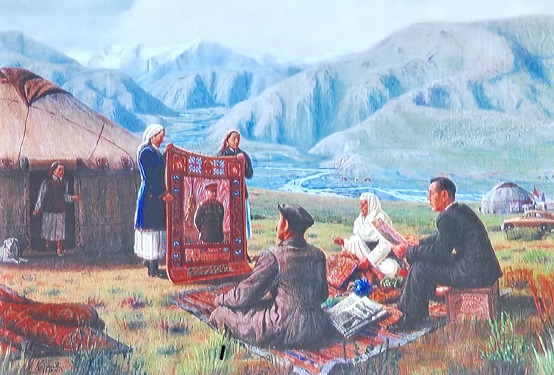
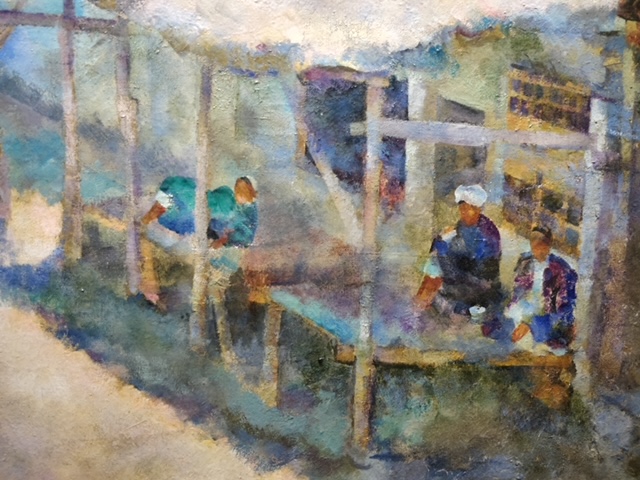
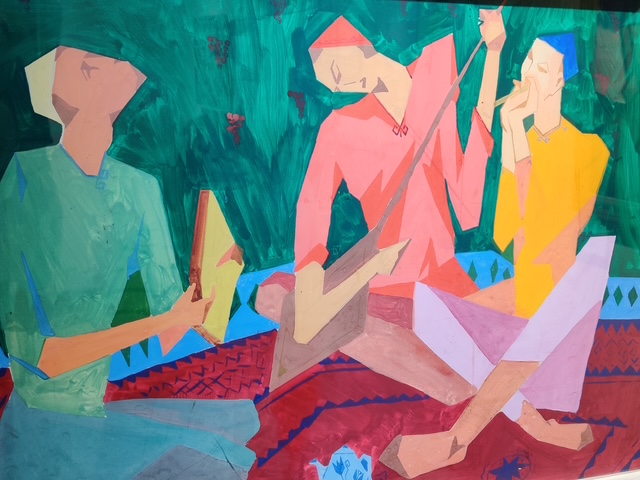
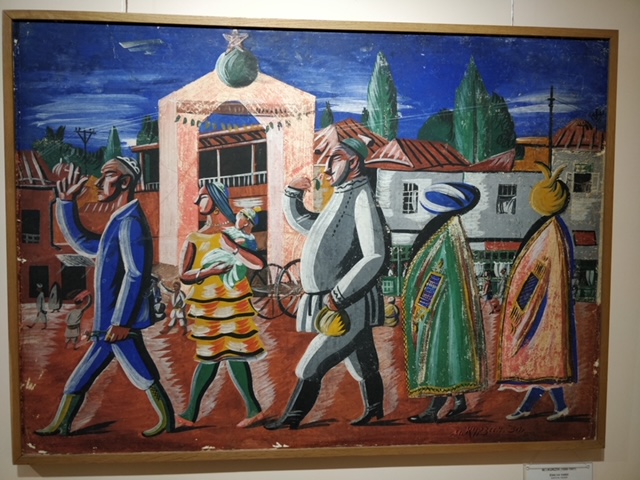
The January Tash lecture was on Igor Savitsky, who was an Ukrainian born painter, archeologist and collector. His family moved to Moscow during the 1917 Revolution. As a young adult, he trained as an electrician, which was seen as a proletarian occupation, his family being considered bourgeois in early Soviet times. He was always interested in painting and drawing, and pursued this as a side occupation. As an adult, he moved to Karakalpakstan, participating in the Khorezm Archeological & Ethnographic Expedition, collecting a wide variety of artefacts. Many artists had moved to the area, attracted by the light and colour, a contrast with Soviet drabness in Moscow, and also because Stalin only wanted paintings in Soviet realism. These artists wanted to explore cubism and other styles, which were heavily frowned on. Many of the artists were sentenced to hard labour in the Gulag, which was akin to a death sentence. Savistsky moved to the new city of Nukus, still in Karakalpakstan, and was able to start a museum at Nukus as the national museum of Karakalpakstan, including much archaeology and also many paintings by banned artists, particularly avant-garde and post avant-garde styles. Our lecturer, Chis Aslan, told the story of Savitsky, showed pictures of his collection, including many very vibrant paintings, and told the story of ten of the artists, some of whom survived the purges and some of whom didn't. The museum is still extant. Savitsky died after cleaning copper artefacts using methods that turned out to be poisonous, and died in Moscow in a sanatorium in 1984. Chris Aslan also showed how the area was ravaged in Soviet times, such as by the death of the Aral Sea, and vividly brought to life both the spirit of the people under severe oppression and the vividness whereby that spirit was manifested through art and the life of the people.
- Professor Robert Gurney
Despite the flourishing of Russian Avant-Garde Art during the first 30 years of the 20th Century, as Stalin rose to power, he banned all but Socialist Realist expressions of art. To own anything else was dangerous enough but to start collecting it was unthinkable.
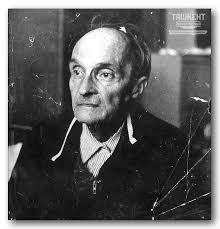
And yet this is what Igor Savitsky did.
Igor Savitsky travelled throughout the Soviet Union, buying, bribing and cajoling until he’d amassed the second largest collection of Russian Avant-Garde art in the world. The State Museum of Karakalpakstan, situated near the south shores of the Aral Sea is now a Mecca for art lovers. Its remote location in the desert oasis of Khorezm, meant that Savitsky was able to get away with such subversive activity, because even the authorities in Moscow were a little hazy as to where exactly Karakalpakstan was.
(Please click on the blue print above to continue reading)
Savitsky promoted Russian artists sent to Central Asia in exile and the works of the first Central Asian artists to paint their own people and landscapes.
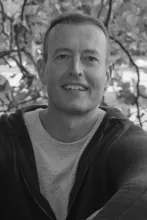
Chris Aslan was born in Turkey (hence the name Aslan) and spent his childhood there and in war-torn Beirut. After school, Chris spent two years at sea before studying Media and journalism at Leicester University. He then moved to Khiva, a desert oasis in Uzbekistan, establishing a UNESCO workshop reviving fifteenth century carpet designs and embroideries, and becoming the largest non-government employer in town. He was kicked out as part of an anti-Western purge, and took a year in Cambridge to write A Carpet Ride to Khiva. Chris then spent several years in the Pamirs mountains of Tajikistan, training yak herders to comb their yaks for their cashmere-like down. Next came a couple more years in Kyrgyzstan living in the world’s largest natural walnut forest and establishing a wood-carving workshop. Since then, Chris has studied and rowed at Oxford, and is now based in Cambridge, but with plans to move to North Cyprus. When he’s not lecturing for The Arts Society, he writes.