

Review:
'I Know It So Well: Classical Musicals and their Inescapable Hit Songs',
Thursday 6th November 2025
with Dr. John Snelson
Our last SID of the year drew a capacity audience to hear Dr. John Snelson of Goldsmiths’ College, talk about musicals and their long lasting hit tunes. The day explored how these hit songs spread from the stage into shared culture. Using live illustrations from the keyboard, it was no surprise that members came out with smiles on their faces and inescapable songs in their heads!
Session 1: I Know It So Well
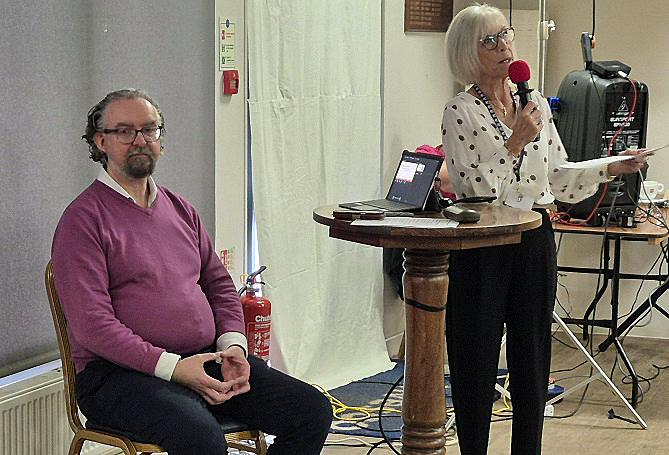
Although America often lays claim to be the originator of musicals, many came from England and were exported to America, as continues to this day. Prior to about 1890, musicals were more akin to operetta and music hall where stories were historic or based in fictional times and places.
In 1892 George Edwardes at the Gaiety Theatre introduced what he named ‘musical comedies’ with modern settings and stories, often romantic farces, with songs that were easy on the ear and could be taken out of the theatre. Examples were The Shop Girl (1894) and Our Miss Gibbs (1900).
Meanwhile in America, British born but American, Guy Bolton was working with PG Wodehouse and composers such as Cole Porter, George Gershwin and Jerome Kern, though the latter spent much time in London scouting for productions which would transfer to the intimacy of small New York theatres with modern, local (NY) plots.
By the 1900s big changes happened with jazz and syncopation becoming important with 2 beats to the bar than the 3 (waltz time) with which Europeans were most familiar. Titles became more vernacular - Oh Lady,Lady! and Oh Boy!
In the 1920s, the old and new co-existed - Viennese based shows and operettas such as The Student Prince and the Desert Song with their exotic locations became less prominent. Show Boat in 1927 was a mix of the two styles with America beginning to tell its own story .
Some songs from this era have lasted for 100 years -‘Tea for two’, ‘I want to be Happy’, ‘But not for me’ . Choruses were designed to be different from the verse with repetition making them memorable.
Tunes and their words were spread initially through busking, at fairgrounds, by military bands, player pianos and simply whistling. Then came radio and broadcasting and films with sound, Oklahoma being one of the first LPs to have almost all the music and the original cast.
The 1950s saw the arrival of a number of stage shows where the traditional collided with the contemporary - My Fair Lady,The Sound of Music, important in the UK, and West Side Story. There was an explosion of youth culture into musicals, then rock music was introduced but songs were often only known in the context of the show.
Out of all this came MTV videos and pop stars singing songs from musicals in a different style and context. More recently films have come first - Frozen for example - with the songs becoming popular afterwards. In recent years many theatrical shows have returned to the stage based on audiences’ familiarity with the songs.
Session 2: The Song’s The Thing
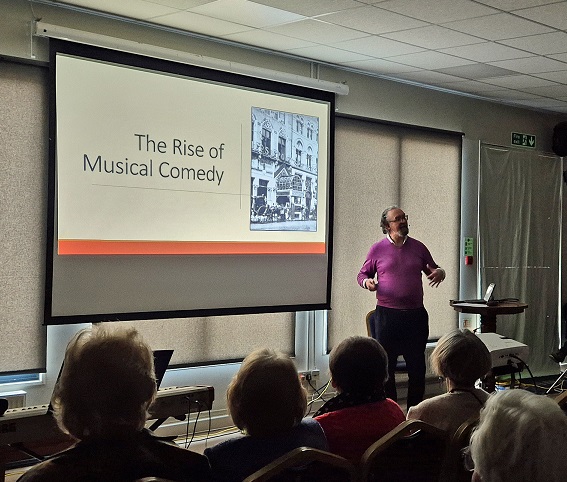
What makes the song leave the theatre for the wider world? ‘Hooks’, lyrics, message and movement all make their contribution. Cole Porter’s ‘Anything Goes’ from 1934 lives on with its catchy tune, word play and sexual innuendo. The phrase ‘Anything Goes’ is repeated often and stands out from the verse which is in minor key. A 6 minute tap dance to the tune conrtibutes too!
Bernstein’s On the Town (1944) produced ‘New York, New York - it’s a hell of a town’, in this case memorable for its brevity.
Lyrics are important for conveying romance. Oklahoma (1943), written in wartime was all about Americana with Lorenz Hart replacing the rather outdated Oscar Hammerstein in partnership with Richard Rogers. Though musicals are a rather unnatural form, songs from shows like this can stand on their own, particularly if they are not too specific. ‘Embraceable You’ and ‘People will say we’re in love’ are enduring examples.
Some numbers grab attention for their message as in ‘You will be found’ from Dear Evan Hanson (2015) and the more familiar ‘Climb every Mountain’.
Session 3: The World Beyond The Musical
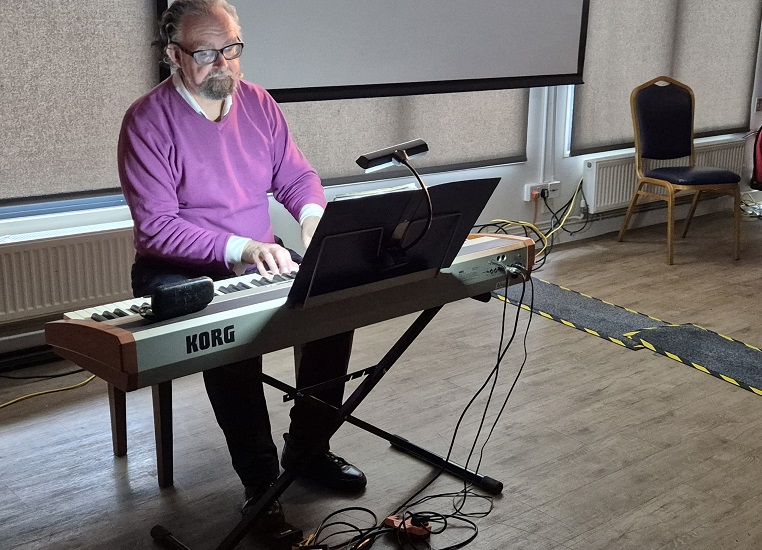
Songs from musicals have been adopted into other situations. ‘As long as he needs me’ from Oliver was, unusually, released before the show opened and is forever associated with Shirley Bassey. She was never in the show but it is identified with her and like Sondheim’s ‘Send in the Clowns’ has longevity through becoming a cabaret ballad. This song has been sung by many performers from Glynis Johns’ original to Frank Sinatra and Judy Dench, guaranteeing its enduring popularity.
Some show songs entered the Great American Songbook and, with enriched harmony, became jazz standards.
Other songs became part of communities -‘Doing the Lambeth Walk’ from Me and My Girl (1937). Some were popularised in commercials or taken into the Concert Hall with attempts to make them more serious.
The style of some songs has made them memorable - high notes make for high emotion - leading to the term ‘money notes’ - ‘Memory’ from Cats for example.
After such an informative and entertaining day, we look forward to having Dr. Snelson back to lecture in 2027, where his subjects are likely to be ballet and opera.
~~~~~~~~~~~~~~~~~~~~~~~~~~~~~~~~~~~~~~~~~~~~~~~~~~~~~~~~~~~~~~~~~~~~~~~~~~~~~

 John Snelson has been fascinated by musicals all his life and is a leading expert in British musical theatre (the subject of his PhD). His publications include Reviewing the Situation: The British Musical from Noël Coward to Lionel Bart (Bloomsbury), How to Enjoy Opera (Oberon/Bloomsbury), Andrew Lloyd Webber (Yale University Press) and chapters in many authoritative reference works. He is especially known for exploring musicals – British and American – in the light of not just the music and the stage, but society and culture to reveal what makes them so appealing, enduring and important. He is well known as a writer and speaker on all aspects of the lyric stage – musicals, opera, ballet – and has written many programme articles for leading companies in the UK and abroad. John has given talks for, among others, the Royal Opera House, English National Opera, the Garsington and Glyndebourne festivals and for BBC radio. For twenty years he worked for the Royal Opera House. He currently lectures at Goldsmiths, University of London.